Namibia Entry Requirements
A visa is required to enter Namibia as a tourist
Since April 2025 a visa on arrival is required to enter Namibia as a tourist or hunter. The process can be done in person or online and only takes a couple of minutes. The visa fee is currently N$1,600 per person for adults. We recommend to do the visa online in advance before you travel to Namibia.
Applying for the visa is a very uncomplicated process. Depending on your citizenship you either need to complete the visa on arrival or tourist visa which has more requirements. Ensure that you apply for the correct visa type to avoid further complications.
Passport requirements
Please ensure that your passport meets the following requirements before you finalize your travel plans for Namibia. Should any of the requirements not be met, you should apply for a new passport as soon as possible.
There need to be at least 3 empty pages in your passport when you enter Namibia. Please note that you might be refused entry if there are not 3 blank pages in your passport.
The passport needs to be valid for a minimum period of 6 months from the date when you plan on leaving Namibia. Be sure to have a additional blank pages when visiting another country.
Your original passport (valid in your country of origin) will need to be presented upon arrival. A certified copy will of course not be accepted by the immigration officials.
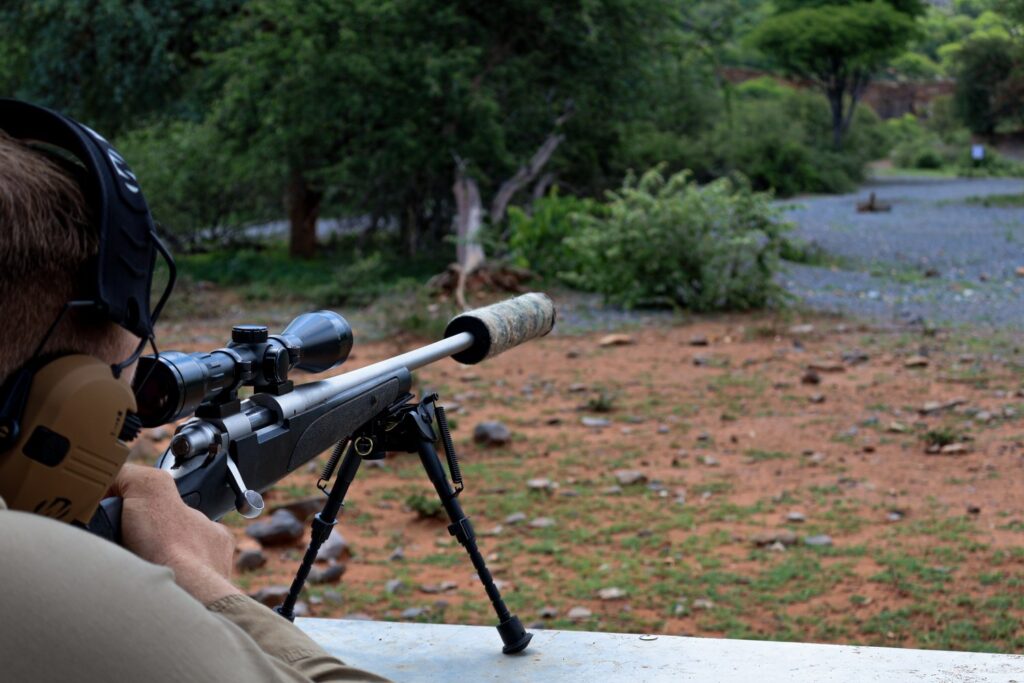
Bringing your hunting rifle to Namibia
Form POL 573: This is the Namibian application for a temporary import permit. You can fill it out in advance or at the airport.
Letter of Invitation: A formal letter from your Namibian hunting outfitter/Professional Hunter (PH) confirming you are hunting on their property.
Proof of Ownership: You must show that the firearm is legally registered to you in your home country.
US Hunters: Use US Customs Form 4457.
Others: A copy of your domestic firearm license.
Passport Copy: A clear copy of your identification page.
Ammunition: You can only bring a maximum of 100 rounds and the ammunition needs to match the caliber of the rifle that you are temporarily importing.
Energy Requirements: Your ammunition must meet the minimum muzzle energy for the game you intend to hunt:
Small Game (Springbok, Duiker): 1,350 Joules (approx. .243 Win)
Medium Game (Kudu, Gemsbok, Wildebeest): 2,700 Joules (approx. .270 Win)
Dangerous Game (Buffalo, Elephant): 5,400 Joules (approx. .375 H&H)
Vaccinations & diseases
Visitors above the age of 9 months need to present a yellow fever vaccination IF:
- You are travelling from an area with a risk of yellow fever transmission
- You have spent 12 or more hours in transit in a country with a high risk of yellow fever transmission in Africa or South America.
Most healthcare professionals recommend the following vaccinations for Namibia:
Hepatitis A, Hepatitis B, Rabies, Measles, Chickenpox, Flu, Polio, Shingles, Typhoid and Tetanus.
Please be sure to consult your doctor to get professional advice in this regard.
Malaria: Depending on the areas where you plan to travel, there is a risk for Malaria in Namibia. High risk areas include the northern parts like Etosha, Caprivi, Ovamboland as well as the north-western part around the Kunene river. Refer to this map to identify risk zones for malaria across Namibia. Note that the risk of malaria transmission is also dependent on the time where between November to June is the highest risk for transmission.
Schistosomiasis: Also known as Bilharzia, is caused by parasitic worms that live in fresh water. There is a high risk of transmission in fresh water including Okavango river, Kunene river as well as any water which is standing. It is highly recommend to avoid swimming, touching, bathing or drinking any freshwater in Namibia that does not come out of a borehole.
Visit our FAQ's for more information
Visit our FAQ’s page to get insights into frequently asked questions by our fellow hunters.
Namibia entry requirements for children under 18 years
In order to combat child trafficking, Namibia introduced new immigration rules in 2016 related to travel with children under the age of 18 years. Parents are now required at all times to carry the original or certified copy of the unabridged birth certificate. The full unabridged birth certificate should list the child’s particulars and both parents’ particulars.
Adults travelling with children where they are not the biological or legal guardians of those children should be in possession of an affidavit statement from the child’s parents giving consent for their travel. If a child is travelling with only one of the parents, the other parent should give consent for travel in the form of an affidavit signed by a commissioner of oath.
Children under 18 that are travelling alone to Namibia are required to provide the following:
- proof of consent from one or both parents/legal guardians in the form of a signed affidavit
- a letter from the person receiving the child including their residential address where the child will be staying
If one or both of the biological parents are deceased, a death certificate needs to be presented that matches the name of the biological parents as it appears on the children’s birth certificate.